This post establishes typical recommended points of interest in choosing and implementing a flowmeter
in your process. It is important to maintain reliable flow measurement and so you should investigate to the
degree that you understand which meter fits your needs and budget. This paper is not an end all guide,
but provides some basic detail and familiarization of the subject matter as your starting point.
Measuring water, oils, fuels, chemical and other fluid flows ensures that the fluid is flowing within your specified process rate and total.
To get familiar with the instruments and processes involved in flow monitoring we provide the following
points of interest to give you the basics on the subject matter.
If a flowmeter isn't required or desired but flow sensing is needed then you may be interested in a flow sensor (see: Flow sensor in this blog).
Flowmeter Types
Many types of flowmeter designs can be employed, the following are a few.
- Differential pressure
- Volumetric
- Turbine - Vortex
- Paddlewheel
- Magmeter.
- Ultrasonic
- Mass flow
- Single/multi-jet
Open Channel Monitoring
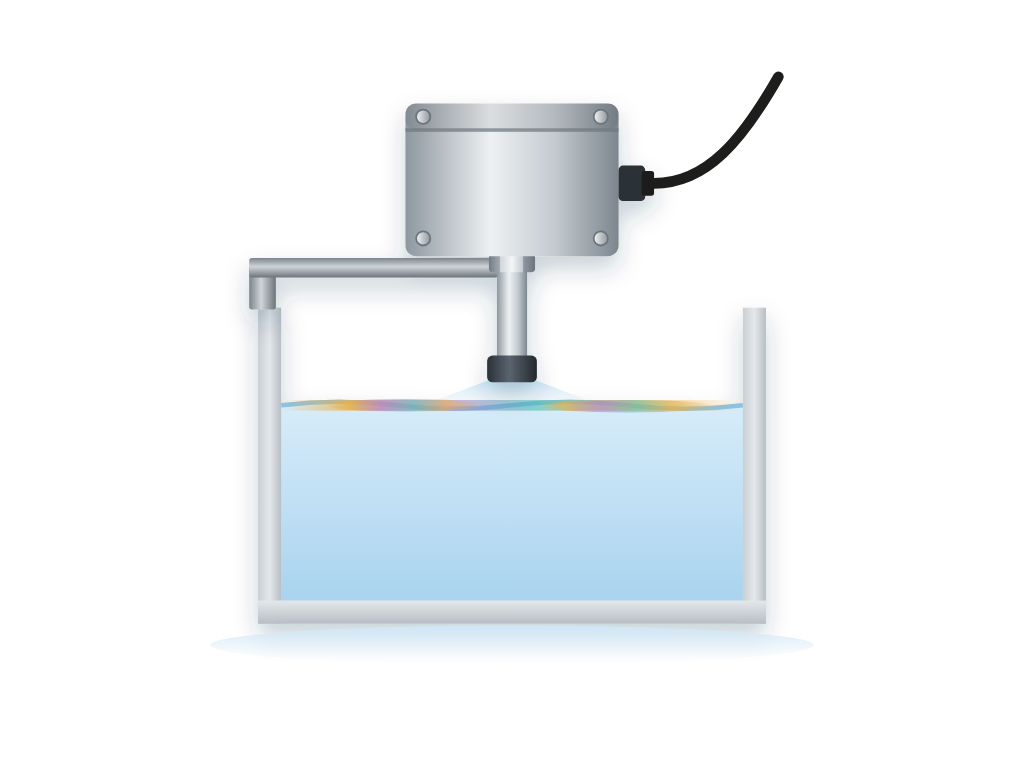
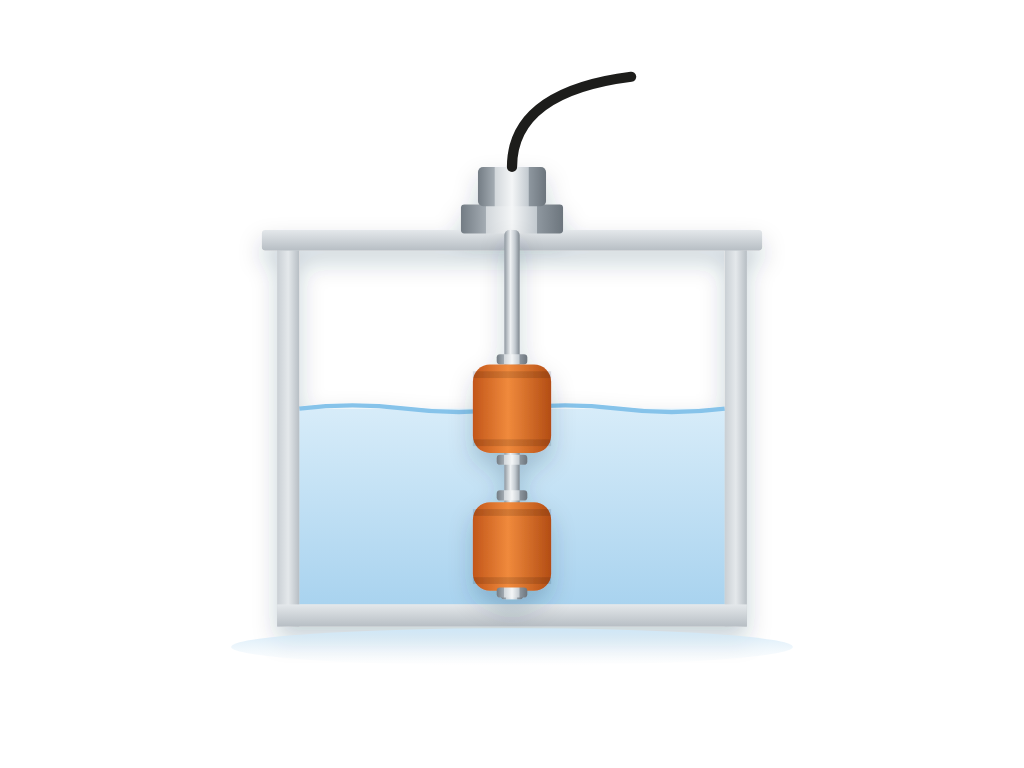
In addition to flowmeters, another type of monitoring is open-channel, where you need to measure flow in
an open trench, culvert, creek or other form of channel. This can be accomplished with the use of a
hydraulic structure such as parshall flume or weir system and a single point level to flow measurement via
ultrasonic or radar sensor.
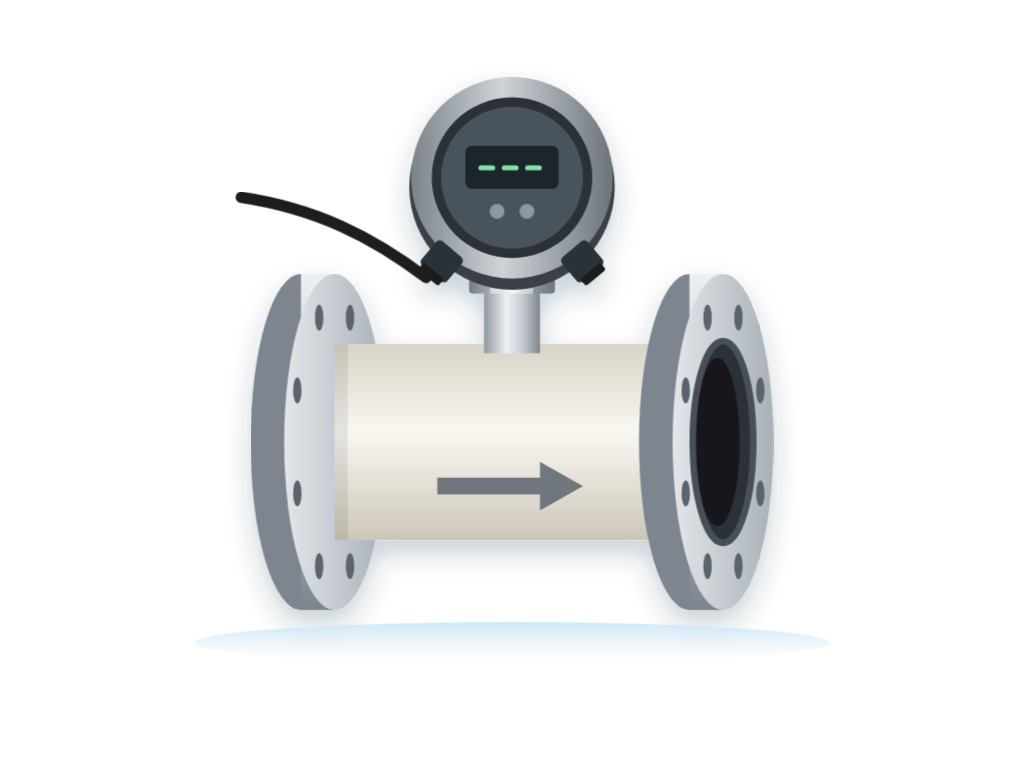
Meters can be flanged spool style, insertion style. Many meters can be purchased with local, remote or no displays and a variety of output types for
connection to the Intell-i-Watch monitor.
Magmeter
with display
Equations
While we have a variety of flowmeters that automatically calculate flow measurement it may be
educational to understand the calculations that make up the measurement.
To calculate volumetric flow in a pipe:
- The basic equation is Q = V * A where Q is the volumetric liquid flow rate, V is fluid velocity and A is
the cross-sectional area of the pipe. Volumetric flow is calculated by multiplying the speed of the
liquid by the area of pipe the liquid flows through.
To calculate mass flow in a pipe
- Density has to be accounted for. The equation for mass flow is M = Q x D, where D is density. The
volumetric flow is multiplied by fluid density to provide a weight or mass of fluid passing through the
pipe.
The online resource https://www.1728.org/flowrate.htm can help you calculate to find the particular
solutions based on the application parameters.
Applying the meter
To install the meter properly, you will find the following are typically required by the manufacturer to the
meter is installed properly:
- Inlet distance from pumps, valves, fittings and other inline devices requires a certain number of pipe
diameters between the meter inlet and upstream devices.
- Outlet distance from pumps, valves, fittings and other inline devices requires a certain number of pipe
diameters between the meter outlet and downstream devices.
- Installation connection can be ANSI flanged or FNPT thread
- Output to monitor can be pulse or 4-20mA
Flowmeters as an investment
Flow meters are a great investment for any industrial manufacturing or production plant. They provide
consistent and accurate measurements with easy-to-read displays and can easily be interfaced with the
Intell-i-Watch to gain more datalogging, analytical, alarming and networked functions.
By paying close attention to fluid flows you can predict and verify consumption, discharge, leakage and
loss as well as other parameters that raise your in-plant efficiencies and reduce waste and cost and this
can be done automatically when our monitoring technologies and meters are applied correctly.
Maintenance
While flow meters are great tools, they must be correctly set up and maintained. If the flow meter is not
properly calibrated, it won’t provide accurate readings. To retain accuracy, run periodic tests and check
diagnostics often so that you know your meters are functioning properly.
Additional thoughts
Although flowmeters may be simple devices there may be the need for accessories such as cables,
fittings flow elements, gaskets, liner types and other items that may be needed for a properly installed
meter. Study the subject matter and contact Pan America Environmental with any questions you may
have for integration with our Intell-i-Watch systems.

Intell-i-Watch multi-sensor transmitter monitoring systems are designed and supported by Pan America Environmental, Inc., with over 35 years of experience in industrial water and wastewater treatment.